June 17, 2026
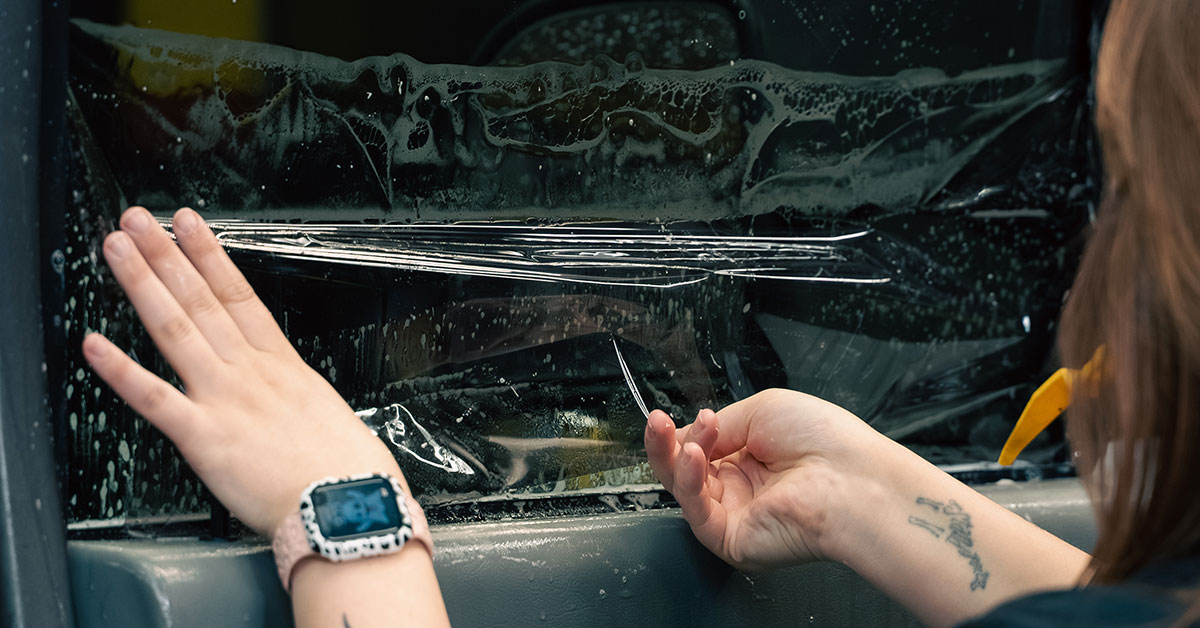
Park in the sun for an hour and you come back to a hot steering wheel, a faded dashboard, and that wall of heat when you open the door. That’s the sun doing three different things to your car at once, and only one of them is the light you can actually see.
The other two are ultraviolet and infrared, and they’re the ones that fade your interior, heat up your cabin, and age your skin on a long drive. This is the real job of a quality window film: cutting down the rays you can’t see while keeping the view you want. Here’s what the sun is sending through your glass, what good film stops, and how to tell whether a film will keep you cool or just make your windows dark.
Sunlight isn’t one thing. It arrives as a mix of ultraviolet, visible light, and infrared, and the three behave very differently once they hit your windows.
Ultraviolet, or UV, is the part that does damage you don’t feel right away. It fades upholstery, cracks a dashboard, and ages skin, the same rays you wear sunscreen for at the beach. Visible light is the part you see, and too much of it is glare. Infrared is the heat. It’s what you feel on your arm at a red light with the AC running, the warmth coming off the glass even when the cabin is cool.
Film works on all three, but the part that matters most is what it does to the two you can’t see. Blocking UV protects your skin and your interior. Blocking infrared is what actually keeps the car cooler.
Some of them, and not the ones you’d guess.
Your windshield is laminated glass, two layers with a thin plastic layer in between, and it blocks almost all UV.
Your side and rear windows are usually a single pane of tempered glass, and they stop most UVB but let a lot of UVA pass straight through.
That’s why so many people in sunny states show more sun damage on the left side of their face and their left arm. The driver’s side window isn’t protecting them. UVA reaches deeper into skin than UVB does, and an untreated side window lets it in on every commute.
This is where window film earns its keep even if you have no interest in dark windows. A quality film blocks about 99% of UV across every window it covers, including the side glass your factory windows leave wide open. You get protection on the windows that actually need it, which is the real point of tinting for UV protection.
UV protection is the easy part. Almost any quality film, dark or nearly clear, blocks close to 99% of UV. That number is basically table stakes, so it isn’t where films separate from each other.
Heat is where they separate, and it comes down to infrared. How well a film rejects infrared decides whether your cabin feels cooler or just looks darker. Cheap dyed film stops some heat, but not much. Ceramic and other infrared-rejecting films are built specifically to turn back that radiant warmth, which is why two cars with the same shade of tint can feel completely different inside.
You’ll sometimes see this written as total solar energy rejected, which is just the share of the sun’s energy, UV plus visible plus infrared, that the film sends back. Higher means cooler. It’s the one number worth asking about if heat is your main reason for tinting.
This trips up a lot of people. It feels like a darker window should block more heat, but darkness and heat rejection are two separate things.
How dark a film looks is about visible light, measured as VLT, or how much light passes through. Heat rejection is about infrared, which is invisible. A very dark dyed film can let plenty of infrared through and still cook your interior, while a nearly clear ceramic film can turn back most of the heat. Some cheap dyed films even soak up heat and radiate it back into the cabin, so the car can feel warmer than it would with no film at all.
So if staying cool is the goal, the shade of the film tells you almost nothing. What matters is how well it rejects infrared, and that comes down to what the film is made of, not how dark it looks.
The physics doesn’t change when the glass stops moving. The windows in a house or an office let in the same UV and infrared, which is why solar control film does for a building what tint does for a car.
On a home, that means floors, furniture, and artwork that don’t fade near the windows, plus rooms that hold a more even temperature instead of baking on the sunny side. On a commercial building, it can cut cooling costs and take the glare off screens near the glass. Most of these films are nearly clear, so you keep the view and the daylight while losing the heat and the fading.
It’s the same idea as the car. Stop the rays you can’t see, keep the light you want.
Once you know UV protection is nearly universal, the real choice is about heat, look, and how long the film lasts. A few things are worth asking about before you commit.
Start with infrared rejection if heat is your issue, since that’s what separates a film that cools from one that only shades. Then think about VLT, the darkness, which is partly personal taste and partly the law, because every state caps how dark your front windows can be. And consider the film type, since a nano-ceramic film holds its color, rejects far more heat, and lasts much longer than a basic dyed film that can fade or turn purple in a few years.
This is where Black Optix Tint comes in. Our lineup runs from Optix HP, a solid everyday film, up through Extreme IR and Supreme IR, nano-ceramic films built for maximum infrared and UV rejection. The right one depends on what you’re solving for and what your state allows. Because the ceramic films are non-metallic, they turn back heat without interfering with GPS, Bluetooth, key fobs, or driver-assist sensors, and like everything we install, they’re American-made and backed by a lifetime warranty.
We carry automotive window tint for every window on the car, ceramic window tint for drivers who want the most heat rejection without going dark, and residential and commercial film for homes and buildings. What it runs depends on your vehicle or building, the number of windows, and the film you choose, so the real answer comes from a quick look.
If your car turns into an oven every afternoon or your interior is starting to fade, your local Black Optix Tint can walk you through the options and match a film to the problem. And because heat rejection is the one thing you can’t see, most locations have a heat-lamp demo, so you can hold your hand behind dyed and ceramic film and feel the difference for yourself before you commit. Find your nearest location and grab a free quote whenever you’re ready.
Yes. A quality window film blocks about 99% of UV rays, both UVA and UVB, on every window it covers. That includes your side and rear glass, which on most cars block very little UVA on their own.
Both, but they’re separate jobs. The darkness of the film cuts glare, while heat reduction comes from rejecting infrared, which you can’t see. A film with high infrared rejection, like a ceramic film, is what keeps the cabin cooler, not just a darker shade.
For a lot of drivers, yes. Nearly clear films can block almost all UV and much of the heat without changing how your windows look, which makes them a good fit if you want protection without privacy or a darker appearance.
It helps a lot. UV is the main cause of fading on dashboards, seats, and trim near the glass, so blocking close to 99% of it slows the damage considerably. Heat and visible light still play a smaller role, which is why a film that rejects infrared as well as UV protects an interior best.
It helps. By blocking about 99% of UVA and UVB on the windows it covers, film reduces the sun exposure you pick up on long drives, especially on the driver’s side, where untreated side glass lets the most UVA through.