April 22, 2026
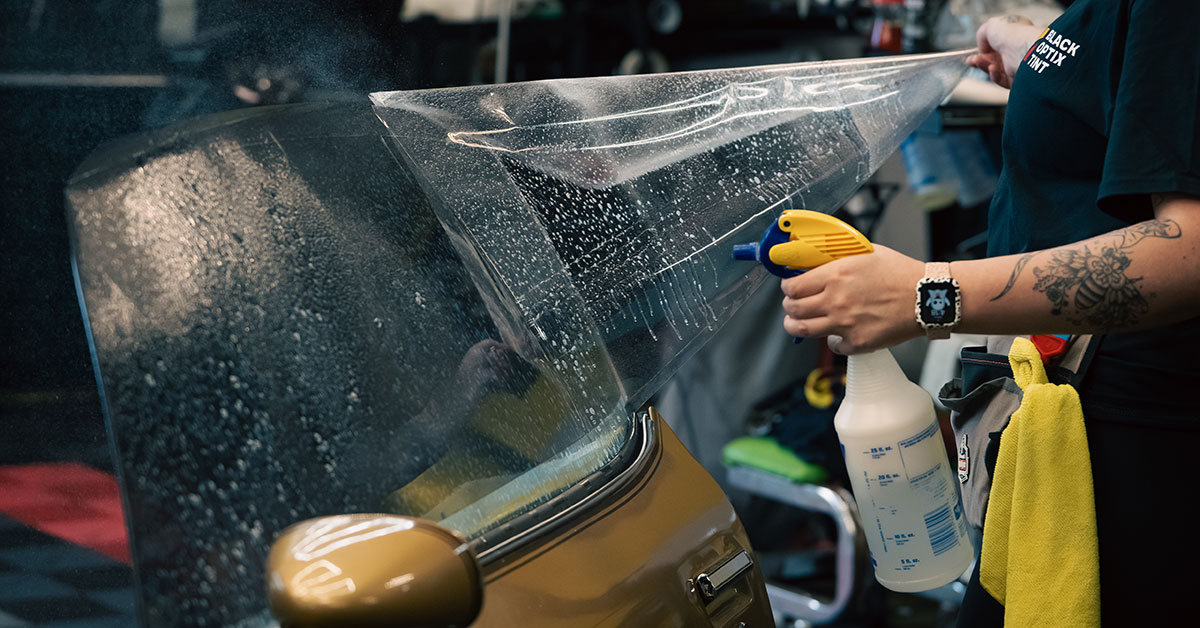
If you’re wondering how much to tint car windows, the honest answer is that it depends. Not because that’s a dodge, but because the real cost is shaped by a handful of specific factors that are worth understanding before you start comparing quotes. The type of film on your windows, the size of your vehicle, how many windows you’re tinting, and the shop doing the work all move the number in different directions.
This guide breaks down each of those factors so you can walk into any tint shop knowing exactly what drives the price and what questions to ask.
Car window film cost isn’t standardized like an oil change. Two vehicles sitting side by side in the same parking lot could have wildly different tint quotes, and both quotes could be completely fair.
That’s because tinting is a skilled trade with real material differences between jobs. A two-door coupe with flat glass and a full-size SUV with deep-curved rear windows are two very different projects. The film itself ranges from entry-level dyed products to high-performance ceramic technology. And the installer’s training, environment, and warranty backing all factor into what you’re paying for.
Understanding these variables puts you in a much better position to evaluate quotes and avoid the trap of choosing on price alone. Across Black Optix Tint locations, the most common question new customers ask is some version of “why is the price so different from what I saw online?” The answer is almost always one of the factors below.
Smaller vehicles with fewer windows and relatively flat glass tend to sit at the lower end of the pricing spectrum. The job requires less film, less labor time, and fewer tricky cuts. If you drive a Civic, a Corolla, or a mid-size sedan, your quote will generally reflect that simplicity.
Larger vehicles cost more for straightforward reasons: more glass surface area means more film, and the rear windows on many SUVs have significant curvature that requires more skill to install cleanly. Trucks with sliding rear windows or extended cabs add complexity too. Expect your quote to reflect the additional material and labor time.
Teslas, vans, vehicles with panoramic glass roofs, and anything with oversized or uniquely shaped windows fall into their own category. A Tesla Model Y, for example, has a massive glass roof panel that some owners choose to tint. The extra surface area and curvature add time and material to the job, so the quote will look different from a standard sedan. That’s normal. If your vehicle has non-standard glass, just mention it when requesting a quote so the shop can give you an accurate number upfront.
The film you choose is typically the single biggest factor in your total cost. Not all tint is created equal, and the differences go well beyond how dark the windows look.
Dyed window tint is the most accessible option and a solid starting point for drivers who want glare reduction, privacy, and a clean appearance. It uses a layer of dye between an adhesive layer and a protective outer coating to absorb solar energy. The result is a non-reflective, dark finish that looks good on just about any vehicle.
Where dyed film has limits is in heat rejection. It typically blocks around 35% to 45% of total solar energy and rejects up to 99% of UV rays, which is solid for protecting your interior from fading. But it doesn’t do much against infrared heat, which is what actually makes your cabin feel hot. Over time, some dyed films can also fade toward a purple hue, though quality products with UV stabilizers hold up significantly better. For drivers in moderate climates or those working within a tighter budget, dyed film gets the job done.
Hybrid tint combines dyed and metallic layers into a single product, giving you better heat rejection than dyed film alone without the heavy metallic appearance or signal interference that fully metallic films can cause. Most hybrid films reject around 50% to 60% of total solar energy. It’s a middle-ground option that performs well across the board: improved heat rejection, solid durability, and a clean look that doesn’t scream “aftermarket.”
Hybrid film tends to hold its color longer than standard dyed products and offers better scratch resistance. For drivers who want a step up in performance without jumping straight to ceramic, hybrid is a strong choice.
Ceramic tint sits at the top of the performance ladder. It uses nano-ceramic particle technology to reject heat at rates that dyed and hybrid films can’t match, often blocking upwards of 90% of infrared heat while maintaining excellent visibility and zero signal interference with GPS, Bluetooth, or toll transponders.
Ceramic film also offers the highest UV protection, the best optical clarity, and the longest lifespan. It won’t fade, won’t interfere with your electronics, and it keeps your cabin noticeably cooler on hot days. The cost reflects that performance. But for drivers who park outside regularly, have leather interiors, or simply want the best protection available, ceramic tint pays for itself in comfort and interior preservation over time.
Coverage scope is another lever that moves your quote. Most drivers tint the rear and side windows as a starting point, which is the most common package you’ll see at tint shops. But you have options.
Some drivers only want the front two windows done, either to match a factory tint on the rear glass or to stay within their state’s legal VLT (visible light transmission) limits. Others want full-vehicle coverage including a windshield tint strip or even full windshield tinting (where legal and where the film meets VLT requirements).
Each additional window adds material and labor. A full-vehicle tint with windshield work will naturally cost more than a rear-and-sides package. When you’re getting quotes, make sure you’re comparing the same coverage scope across shops so the numbers are apples to apples.
VLT is the percentage of visible light that passes through the film. The lower the number, the darker the tint. A 50% VLT lets half of visible light through and looks fairly subtle from the outside. A 35% VLT is the most popular choice for side windows, offering a noticeable tint without feeling too dark from inside the cabin. A 20% VLT has a significantly darker look and limits visibility at night. And 5% (often called “limo tint”) is as dark as it gets, almost opaque from the outside.
VLT matters for your quote because it affects which films are available at each shade level and because your state’s tint laws set legal limits for each window. Front side windows, rear side windows, and rear windshields often have different legal maximums. Going darker than what’s legal can mean a ticket, a failed inspection, or having to pay for removal and reinstallation with a compliant film.
You can buy window tint film online and attempt a DIY installation. Plenty of people do. But the gap between a professional result and a DIY job is enormous, and the money you save upfront often comes back around as a redo cost within a year or two.
Professional installation means working in a controlled, clean environment where dust and debris won’t get trapped under the film. It means precision cutting with plotters or patterns designed for your specific vehicle, not freehand trimming with a razor blade on your windshield. And it means an installer who has done hundreds or thousands of windows and knows how to handle curved glass, defroster lines, and tight gasket edges without leaving bubbles, creases, or gaps.
One thing most people don’t realize is that installation difficulty varies a lot even among vehicles in the same size class. Rear windows with steep curvature require the installer to heat-shrink the film to match the shape of the glass. That process takes training and patience. Rushing it, or skipping it, is one of the most common causes of fingers, creases, and early failure along the edges. It’s the kind of detail that separates a professional install from a DIY attempt.
At Black Optix Tint, every installation is handled by company-trained professionals using the latest tools and techniques. The result is a clear, lasting tint with no distortion, no haze, and no shortcuts. Every customer also gets to see and feel the difference before buying through an in-store heat lamp demo, so you know exactly what your film will do before it goes on your vehicle. That kind of transparency is rare in this industry, and it’s one of the reasons the experience feels different from the moment you walk in.
There’s also the warranty factor. A reputable shop backs their work with a warranty that covers bubbling, peeling, cracking, and discoloration. DIY film might come with a manufacturer warranty on the product itself, but nobody is warranting your installation. If it fails, you’re buying new film and starting over.
Bargain tint jobs are one of the most common regrets in the auto aftermarket world. Low-quality film installed in a non-controlled environment often starts showing problems within months: purple fading, bubbling along the edges, peeling corners, or a hazy look that gets worse over time.
When that happens, you’re paying twice. Once for the original job, and again for a quality shop to remove the old film (removal itself is labor-intensive and adds cost) and reinstall with better product. Spending a little more upfront for quality film and skilled installation almost always saves money in the long run.
Not all tint quotes are created equal, and the lowest number on paper doesn’t always mean the best value. Here’s what to pay attention to when you’re shopping around.
Ask what type of film the shop uses and whether they can explain the differences between their options. A good shop will walk you through what each film does, how it performs, and why they chose to carry it. If a shop can’t tell you much about the product going on your windows, that’s worth noting. Ask about the warranty too, both on the film itself and on the installation labor. A lifetime warranty on the film means nothing if the shop won’t stand behind their install work.
Look at the installation environment. Is the shop clean? Do they have a dedicated tint bay, or are they working in an open garage with the door up? Dust and contaminants are the enemy of a clean tint job, and a controlled environment makes a real difference in the finished product.
Ask whether the shop will help you choose a VLT percentage that keeps you legal in your state. A good shop knows local tint laws and will steer you toward a look that won’t get you pulled over or failed at inspection.
And pay attention to how the shop treats you. Some customers want a deep walkthrough of every film option. Others just want to know it’ll be done right and done well. Either way, the shop should meet you where you are. At Black Optix Tint, the process adapts to the customer. Whether you want a detailed comparison or you’re ready to go, the team is trained to make the experience easy and get the job done at a level you can trust. That approach is baked into how every location operates.
If you’re researching car window tint costs, you might not realize that the same technology applies to homes and commercial buildings too. And the factors that drive pricing are similar in concept, just different in scale.
For residential window tinting, the cost depends on the number and size of windows, the type of film (solar control, decorative, security), the orientation of your home (south-facing windows in hot climates benefit most), and whether you’re doing a few windows or the whole house. Homeowners typically pursue residential tinting for heat reduction, UV protection for furniture and flooring, glare control, and added privacy.
Commercial window tinting follows the same logic at a larger scale. Office buildings, storefronts, restaurants, and warehouses all benefit from solar control film that reduces cooling costs, protects merchandise from UV fading, and improves occupant comfort. The cost scales with square footage, film type, and access complexity (multi-story buildings may require special equipment).
Black Optix Tint handles automotive, residential, and commercial tinting under one roof. That full-service approach means you’re working with a team that understands film technology across applications, not just one narrow slice of the market.
Find your local Black Optix Tint to talk with a specialist and get a free quote.
For most drivers, yes. Ceramic film rejects significantly more heat than dyed or hybrid options, lasts longer, and won’t interfere with electronics. If you park outside regularly, live in a warm climate, or want the best UV protection for your interior, ceramic tint delivers a noticeable day-to-day difference in comfort and long-term value.
It depends on the film quality and the installation. Cheap dyed film might start degrading in two to three years. High-quality dyed and hybrid films typically last five to ten years. Ceramic film installed by a trained professional can last the lifetime of the vehicle with no fading, bubbling, or peeling, which is why it often comes with a lifetime warranty.
In many states, you can apply a tint strip across the top portion of your windshield (typically the AS-1 line or the top five to six inches). Full windshield tinting is legal in some states with specific VLT requirements but restricted in others. A knowledgeable tint shop will know your state’s laws and help you stay compliant while getting the look and protection you want.
Absolutely. Residential window tinting can reduce solar heat gain by up to 80% depending on the film, which directly lowers your air conditioning workload during summer months. It also blocks UV rays that fade furniture, hardwood floors, and artwork. For homeowners in sun-heavy regions, the energy savings alone can offset the cost of the film within a few years.