Does window film help in winter? Yes, though how much depends on the film you pick. A low-E film keeps more of your heat indoors. Almost any quality film cuts the glare from the low winter sun and keeps blocking the UV that fades floors and furniture all year.
One thing catches people out: a mirrored film that gives you privacy on a summer afternoon stops working once it's dark outside at 5:30 and your lights are on.
Most guides to window film for winter assume you live in Minnesota or the UK. Winters across most of the South are short and mild, with plenty of bright days, and that changes which benefits matter most. Here's how film behaves in cold weather, at home and at work.
How window film helps in winter
Window film helps in winter in four ways. It slows heat loss through the glass and makes the seat next to a window more comfortable. It also cuts glare from the low sun and keeps blocking UV through the colder months. How much heat it saves depends on the type of film.
This guide is about film applied directly to the glass by an installer. That's a different product from the plastic insulation kits you stretch across a window frame each winter and peel off in spring.
Solar control film vs. low-E film
There are two main types of window film, and they do different jobs.
Solar control window films are the kind most people picture when they think of tint. It's built to stop the sun's heat (infrared light) and UV from coming in. That's a summer job, and it's the main reason people buy film for homes and offices. Our guide to how window tint protects against UV rays and heat covers how film handles UV and infrared in more detail.
Low-E window film (short for low emissivity) has a coating that reflects heat back toward its source. On the inside of a window in January, the heat it reflects is the heat from your furnace. The U.S. Department of Energy's Energy Saver guide lists low-E film as one of its cold-weather window tips, applied to the inside of the glass "to keep heat from radiating out." Many low-E films also block solar heat in summer, which is why you'll see them sold as all-season films.
The three numbers to ask about
Window film, like windows, gets rated by the National Fenestration Rating Council (NFRC), and its window film label guide explains the ratings. Three of them tell you most of what you need for winter.
The U-factor is how fast a window loses heat that doesn't come from the sun. Lower is better in winter. The solar heat gain coefficient (SHGC) is how much of the sun's heat gets through. Lower is better in summer, but a lower number also means less free warmth on a sunny winter day.
Visible transmittance (VT) is how much daylight gets through, which is the trade you make for glare control.
A plain solar control film mostly lowers SHGC. A low-E film lowers the U-factor and usually SHGC as well. Compare films on the same type of glass you have, because the numbers change with the glass.
And don't judge a film by its shade. A nearly clear film can block more heat than a darker one. If an installer can't tell you these numbers for the film they're quoting, ask them to look them up.
Does window tint keep heat in?
Some, but standard tint isn't designed for it. A solar control film adds a thin layer to the glass and slows heat loss a little. A low-E film does much more, because its coating reflects heat rather than just adding a layer.
Older single-pane windows gain the most
The worse your windows are now, the more any film can help. A single-pane window in an older house loses heat fast, and the glass gets cold enough that you can feel it from across the room. Film can't turn that into a modern double-pane window. But a low-E film on old glass is a much smaller job than replacing the windows, and you'll feel the difference standing next to it.
On newer double-pane windows that already have a low-E coating, the extra gain from film is smaller, and the bigger winter wins are glare and UV.
Film doesn't fix drafts
If you can feel moving air near a window, the problem is a leak around the frame or sash, not the glass. Film won't seal that. Weatherstripping, caulk or a window repair is the right first fix, and film can do its job on the glass once the leaks are sorted.
The trade-off: less free heat from the sun
This part rarely gets mentioned. On a clear winter day, sun coming through a south-facing window warms the room for free. The Department of Energy recommends opening the shades on south-facing windows during the day for exactly that reason.
A film that blocks a lot of solar heat blocks some of that winter warmth too. So for a home with long, cold winters and big south-facing windows, a dark solar film on those windows can cost you a little in January to save in July.
Low-E film doesn't make that trade-off disappear, because most low-E films cut some solar heat too. What it adds is keeping your own heat in, so check both the U-factor and the SHGC.
There are a few ways to handle it. Use a lighter film on the south side, choose a low-E film with a higher SHGC for rooms that rely on winter sun, or put the strongest solar film on the east and west windows, which take the harshest summer sun. That last idea also comes straight from the Energy Saver guide. A good installer will look at which way each window faces before recommending one film for the whole house.
Winter sun glare is worse than summer glare
The winter sun sits much lower in the sky, so it shines straight through windows instead of hitting the roof. At noon on December 21, the sun is about 39 degrees above the horizon in Tampa, 31 degrees in Charlotte and 26 degrees in Lehi, Utah. In June it's 73 to 85 degrees up in the same places, almost overhead.
That low angle puts sunlight across your living room, onto the TV and right into the eyes of anyone at a desk facing a window. Rooms facing south and west get the worst of it in the afternoon. Window film helps reduce glare without making the room dark, and even lighter films take the edge off. If you're deciding how dark to go, our guide to window tint percentages explains what each number looks like.
The same low sun makes the drive home harder too. If that's the glare that bothers you most, car window tint works on the same principle.
UV doesn't take the winter off
UV rays get through glass all year, cloudy days included. Hardwood floors, rugs, upholstery and artwork keep fading in December, and the low sun reaches further into the room than it does in summer, so things that sit in shade in July can be in direct light in January. For UV protection, quality window films block up to 99% of UV rays, and they do it in every season. Check the UV figure for the film you're quoted, since it isn't the same for every product.
Film slows fading, but it can't stop it completely. Visible light and heat cause fading too, so a valuable rug or piece of art in direct sun still needs a curtain or a move out of the light.
Window film for businesses in winter
Offices and shops have their own winter problems, and most of them are about people rather than heating bills.
Glare is the big one in most commercial buildings. Low afternoon sun across a row of monitors is the kind of thing employees complain about and managers fix with blinds that then stay shut all day. Commercial window film keeps the view and the natural light while cutting the glare.
The desks along the window line are also the coldest and least popular in winter. If the chill comes off the glass, a low-E film helps. If it's air leaking around the frame, get that fixed first.
Retail has a fading problem at exactly the wrong time. Holiday stock sitting in a sunny front window for six weeks can fade before it sells. UV-blocking film protects the display without hiding it.
Privacy after dark
Reflective or mirrored film gives daytime privacy because it's brighter outside than inside, so people looking in see a reflection. After sunset that flips. With the lights on inside and dark outside, people can see in, and you'll see your own reflection looking out. In winter that happens before most offices close and before most families sit down to dinner.
If you need privacy around the clock, a frosted or decorative film is the better choice. It blocks the view in both directions at any hour and still lets light through. Plenty of businesses use it on conference rooms and the lower half of street-facing windows.
Winter in the South is still window film season
Across most of Florida, Texas, Georgia and the Carolinas, the furnace runs for a few months and the air conditioner runs for most of the year. Even in December there are warm afternoons when a sunny room gets hot. So for most homes in the South, a good solar control film earns its keep in summer and still pays you back in winter with less glare and less fading.
Utah, Tennessee and northern Virginia get real winters, and that's where a low-E film makes the most sense. Tell your installer which rooms feel cold and which ones get too much sun, and the right film may be different for each.
Fall and winter are also a calm time to book. Window tinting shops are busiest when the weather turns hot and everyone thinks about it at once. Getting film on in the cooler months means it's already working when summer arrives.
That's where Black Optix Tint comes in. Our shops install residential window tint and commercial window film in shades from nearly clear to dark privacy films, plus safety, security and decorative films. It's professionally installed at your home or business, and most home jobs take a few hours.
Find your nearest Black Optix Tint and ask for a free quote. Bring a list of your problem windows and which way they face, and we'll help you match the film to the room. If keeping heat in is your main goal, ask your shop which low-E options it carries for your type of glass.
Can you install window film in cold weather?
Yes. Home and office film usually goes on the inside of the glass, so the room being heated matters more than the weather outside. What the installer checks is the temperature of the glass itself, which can stay cold on a frosty morning even in a warm room, and whether the space stays heated overnight.
Film makers publish temperature limits for installing their films, and a good installer works within them. The film also takes longer to cure when the glass is cold and the weather is damp and cloudy.
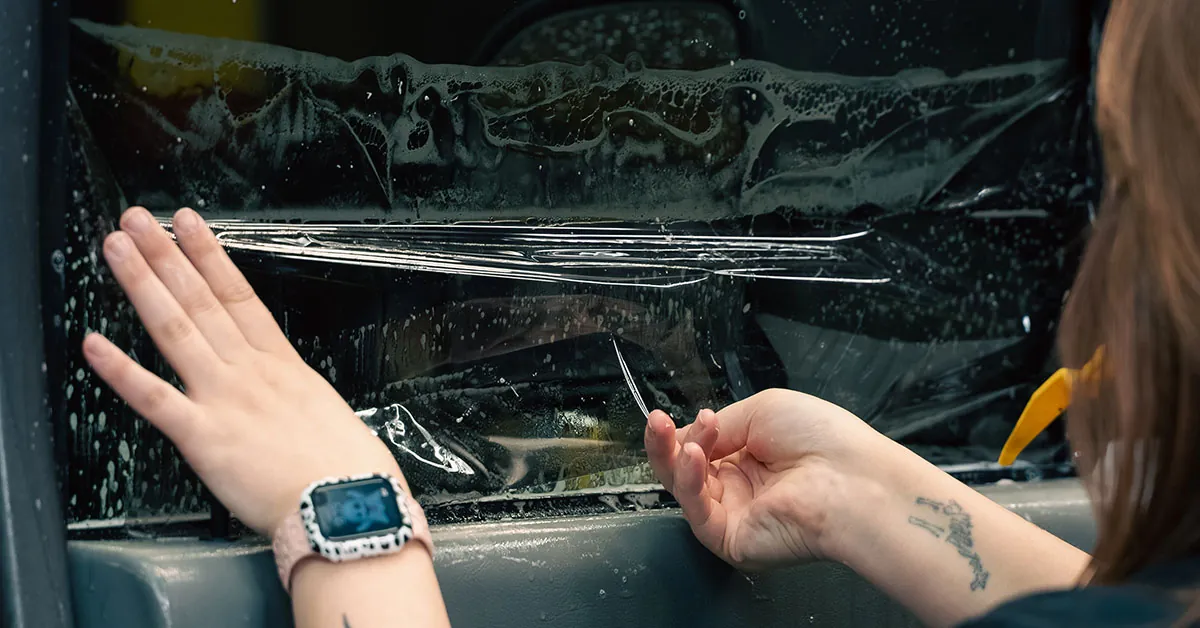
While it cures, you might see small water pockets or a slight haze. That's normal. It's leftover application solution drying out through the film, and it clears on its own. Your installer will tell you how long to wait before cleaning the windows, and during the winter months that wait is usually a little longer than in summer.
Frequently asked questions
Does window tint make your house colder in winter?
Not in any way you'd notice. A dark solar film can block some of the free heat that winter sun brings through south-facing windows, so those rooms may warm up a little less on clear days. A low-E film keeps more of your heating inside, though it can also cut some solar warmth, so compare its U-factor and SHGC. If you're worried about it, use a lighter film on your south-facing windows.
Is it better to tint home windows in winter or summer?
Either works, because home film goes on the inside of the glass in a heated or cooled room. Winter has two advantages. Shops are usually less busy, and the film is already working when the hot months start. It may take a little longer to cure in cold, damp weather.
Can window film crack windows in cold weather?
It's rare, but it can happen if the wrong film goes on the wrong glass. Film that absorbs a lot of heat can make the sunny part of a pane much warmer than its cold, shaded edges, and that temperature difference puts stress on the glass. Large panes, tinted glass and some double-pane windows carry more risk. The risk is highest on sunny but cold days, as NFRC's window film guidance notes.
Film manufacturers publish charts of which films are safe on which glass types, and a professional installer checks your glass against them before quoting. It's also worth checking whether film affects your window warranty.
Does window film give you privacy at night?
Reflective film doesn't. It only works when it's brighter outside than inside, so at night with your lights on, people can see in. For privacy at any hour, choose a frosted or decorative film, or pair your window film with blinds or curtains for the evening.