August 7, 2026
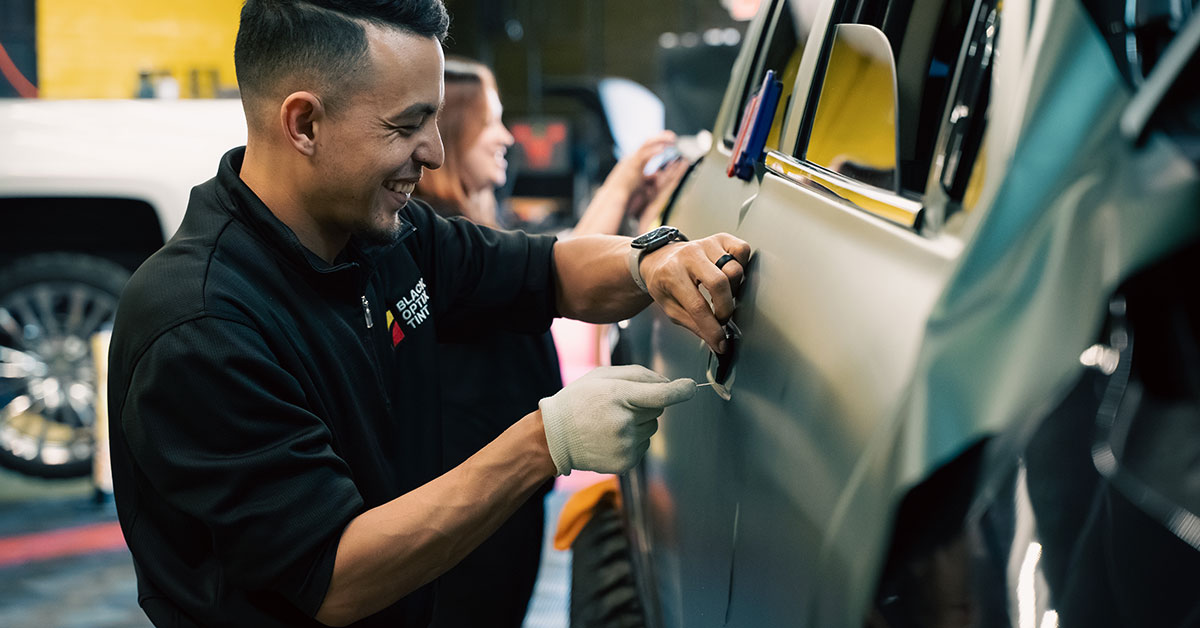
The ceramic coating vs. PPF debate usually starts with someone trying to decide which one to buy. That framing is the problem. The two products don’t compete with each other, and picking a winner between them is the wrong exercise. The real question is what you’re trying to protect your paint from.
Here’s the fastest way to keep them straight. Paint protection film (PPF) is a physical layer that takes chips and scratches so your paint doesn’t. Ceramic coating is a chemical layer that adds gloss, makes water bead off, and helps your finish resist UV and staining. Two different jobs.
If you remember one line from all of this, make it this one. PPF protects against things that hit your paint. Ceramic protects against things that land on it.
The PPF vs. ceramic coating difference comes down to physical versus chemical. Paint protection film is a thick, clear urethane film that installs directly over your paint and absorbs impact. Ceramic coating is a liquid polymer that bonds to your clear coat and becomes part of the surface, adding gloss and chemical resistance without adding any physical thickness worth mentioning.
That difference in construction drives everything else. One is armor. The other is a shield against the slow stuff, the sun and the contaminants and the wash cycles that dull a finish over years. Neither one does the other’s job, which is why comparing them head to head so often leads people to the wrong purchase.
Film is built for the things that physically strike your car. Rock chips on the highway, sand and road debris, light scratches from a car wash or a careless door in a parking lot. Most quality films even self-heal minor swirl marks once they warm up in the sun.
If something is going to hit your paint, paint protection film is what stands in the way. That’s the whole point of it. The film takes the damage and your paint underneath stays exactly the way it left the factory.
Ceramic works on a completely different threat list. It fights the chemical and environmental damage that builds up slowly. UV rays that fade paint over the years, bird droppings and bug guts that etch if they sit too long, water spots, and the general road grime that dulls a finish.
It won’t stop a rock. Nothing about a coating is going to absorb an impact. But it keeps the paint underneath cleaner, glossier, and far easier to wash, and it holds that finish for years longer than wax ever could. Ceramic coating is the difference between a car you have to scrub and a car that mostly rinses clean.
On durability, PPF generally lasts the longest, often close to a decade on a well-kept install. Ceramic runs a few years, depending on the product and how you maintain it.
Both make washing easier, though ceramic’s hydrophobic properties are what people notice first. Water beads up and sheets off, dirt has less to grab, and the car spends less time looking dirty between washes. Over a year that adds up to noticeably easier cleaning.
On looks, the two go opposite directions. PPF is designed to be invisible, and it comes in gloss or matte so it disappears into whatever finish your car already has. Ceramic actually changes the appearance. It enhances gloss, deepens the shine, and gives paint that wet, reflective look.
This is where the answer stops being general and starts depending on how you drive.
Think about where the damage actually happens on a car. The front bumper, the hood, the fenders, the side mirrors, the leading edge of everything that meets the road first. Those are your high-impact areas, and they’re exactly where film earns its keep.
If you rack up highway miles, drive gravel roads, or commute somewhere that’s constantly throwing debris at you, film is the answer. And if you’re keeping this car for the long haul, or you’ve got a paint color that’s expensive or hard to match, PPF protects the finish and the resale value that comes with it.
For plenty of people, coating on its own is genuinely enough. If you’re not putting your paint in the line of fire every day, and what you really want is a car that stays glossy and cleans up fast, ceramic does exactly that.
It handles the sun, the contaminants, and the wash cycles that slowly wear a finish down. For normal daily driving, that covers most of what actually damages a finish. You get real protection and a serious gloss upgrade without the bigger commitment of full film. For the average driver who wants a car that looks great and stays easy to maintain, coating alone covers it.
If you want the most protection possible, you don’t pick one. The strongest setup is PPF on your high-impact areas with ceramic coating on top of the whole vehicle, film included.
The film takes the hits. The coating adds gloss and that easy-clean, water-shedding surface everywhere, and it even helps the PPF itself stay cleaner and last longer. Physical protection where you get struck, chemical protection across the entire car. That’s the combination we build at Black Optix Tint for people who want every angle covered.
The install matters as much as the product. Two shops can put the same film or the same coating on the same car and get very different results, and most of that difference happens before anything touches the paint.
Film is cut to the specific panels on your vehicle, laid down wet, and squeegeed until every bit of moisture and air is worked out from underneath. On the panels where it’s possible, the edges get wrapped around and tucked behind, so you don’t end up with a visible film line sitting on the surface of your hood.
Good shops pattern-cut the film off the car for your exact year, make, and model. That keeps blades away from your clear coat entirely. Once it’s down, the film needs time to fully adhere and any moisture trapped underneath has to evaporate, which is why your car usually stays with us for a day or two rather than a couple of hours.
Here’s the part most people don’t expect. A coating bonds to the painted surfaces it lands on, which means it locks in whatever is already there. Coat over swirl marks and you’ve sealed those swirl marks under a layer that’s designed to last for years.
So the prep is the job. Professional ceramic coatings are built to bond for years, which is exactly why what sits underneath them matters so much. That means a decontamination wash, a clay treatment to pull embedded contaminants out of the clear coat, and usually some level of paint correction to remove existing swirls and light scratches. Only then do we apply ceramic coating. Ceramic coating is applied by hand in thin, overlapping passes, panel by panel, then leveled before it flashes. After that it needs to cure, and the car has to stay dry and unwashed for a stretch while that happens. Any shop that quotes you a same-day ceramic coating on a car with visible swirls is skipping the part that makes it worth doing.
The best time is as early as you can. Paint that hasn’t accumulated damage yet needs less correction, which means better results and a shorter list of problems to solve first.
A brand new car is close to ideal, though not automatically perfect. Vehicles pick up defects in transport and during dealer prep, and it’s common to find light swirls on a car with fewer than a hundred miles on it. A good shop checks rather than assumes.
On a used car, both products are still worth it, but the sequence matters more. Existing rock chips can’t be undone by film going over the top of them, and a neglected finish needs correction before a coating goes on. Budget for that step instead of being surprised by it.
PPF generally costs more than ceramic coating, and the reason is straightforward. It’s a hands-on install with more material and more labor behind it, cut and fitted to the specific panels on your specific vehicle.
Full-vehicle film sits at the top of the range. Protecting just the impact zones lands in the middle. Ceramic on its own is the most accessible way in. The right move is matching what you spend to how you drive and how long you actually plan to keep the car, not buying the most coverage available and hoping it was worth it.
Both products are low maintenance. Neither one is no maintenance.
For a coated car, wash regularly with a pH-neutral soap and a two-bucket method or a touchless setup. Skip the automatic washes with spinning brushes, which put swirls into anything they touch. When you notice water stops beading the way it used to, that’s the signal the coating is asking for attention.
Film wants the same basic care, with a couple of additions. Keep a pressure washer from blasting directly at the edges, since that’s where lifting starts. And clean off bird droppings and bug splatter reasonably soon rather than letting them bake in. The film resists that kind of etching far better than bare paint, but it isn’t immune to it.
For both, stay away from harsh solvents and abrasive polishes. Those are formulated to cut into a surface, which is the opposite of what you want on a protective layer you paid to have installed.
Not sure where you land? That’s the easy part. Bring your car to your local Black Optix Tint and we’ll look at how you actually drive, then recommend the right mix of paint protection film and ceramic coating for it. No guesswork, and no pressure to buy coverage you don’t need.
Find a Black Optix Tint near you and get a free quote on ceramic coating, paint protection film, or both.
Neither one is better in the abstract, because they defend against different threats. PPF is better if rock chips and physical damage are what worry you. Ceramic coating is better if you care about gloss, UV, staining, and easier cleaning. Drivers who want both put film on the high-impact areas and coating over everything.
Yes, and it’s one of the most common combinations we install. The coating goes over the film and adds gloss and water repellency on top of the physical protection, and it makes the PPF itself easier to keep clean over its lifespan.
PPF goes on first. Film is applied to prepped, corrected paint, and the ceramic coating goes over the top of it afterward, covering both the filmed panels and the bare ones. Doing it the other way around means the film has to bond to a coating that was engineered to repel things.
No. Ceramic coating resists the light swirl marks that come from washing and drying, but it can’t absorb impact. A rock at highway speed will chip coated paint the same as uncoated paint. For that kind of damage you need paint protection film.
Paint protection film generally lasts longer, often close to a decade on a quality install that’s maintained well. Ceramic coating typically runs a few years before it needs to be refreshed. Both depend heavily on the product used and how the vehicle is cared for.
It can be, as long as you go in knowing the finish needs work first. Chips and scratches already in the paint won’t disappear under film, and a coating will lock in whatever swirls are there. Pair either product with paint correction and a used car can end up looking better than it has in years.
It depends on how your paint gets damaged. If road debris is your main threat, film on the front end is the priority. If you mostly want gloss and easy cleaning, coating on its own is plenty. Drivers who want both physical and chemical protection layer them, with film on the impact zones and coating over everything.