May 1, 2026
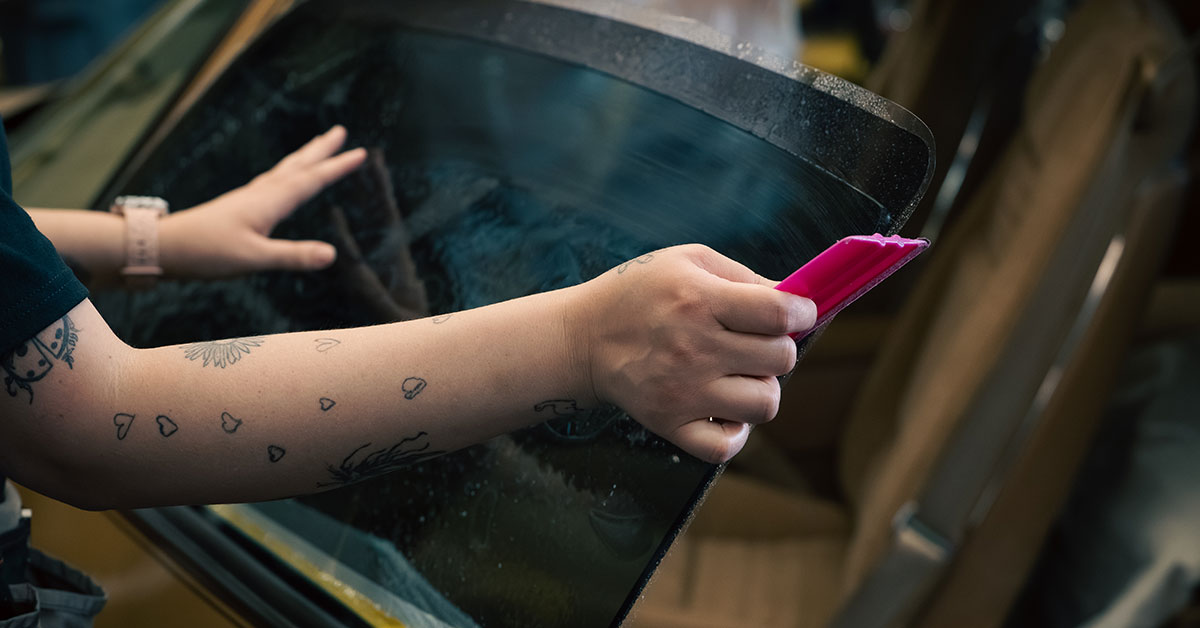
The right tint changes a car. The cabin stays cooler on hot days, glare drops to something manageable, and the interior stops baking in the afternoon sun. When you catch your vehicle in a parking lot, it just looks finished. But getting there starts with one decision: choosing the right tint percentage.
You’ll see numbers like 5%, 35%, and 70% attached to different tint levels. Those numbers tell you how much light passes through the film, but they don’t mean much on their own. The gap between 35% and 20% sounds minor on paper. On your windows, it’s a completely different car.
This guide breaks down how window tint percentages work, what each level looks like in the real world, and how to pick the shade that fits your vehicle, your style, and your state’s laws.
The percentage on window tint refers to its VLT, or visible light transmission. That’s just a measure of how much visible light makes it through the glass and film together. A 50% tint lets half the light in. A 5% tint blocks almost all of it.
Think of it like sunglasses. A light pair with barely shaded lenses might sit around 70% VLT. A dark pair you’d wear fishing on open water is closer to 15% or 20%.
What’s important to know is that lower numbers mean darker tint. A 5% film is far darker than a 50% film. The scale runs opposite to what most people expect when they start shopping for car window tint.
Your vehicle’s factory glass isn’t perfectly clear. It already blocks some light on its own, usually letting about 70% to 80% of visible light through before any aftermarket film goes on.
When you add film on top of factory glass, the two VLT values multiply. If your glass sits at 75% and you apply a 50% film, your actual VLT lands closer to 38%, not 50%. That’s why two cars with the same film can end up looking noticeably different.
This comes up a lot on SUVs and trucks. Rear windows on many of these vehicles leave the factory with a dyed privacy tint around 15% to 20% VLT. That color is baked into the glass itself, so it can’t be removed or lightened.
Auto tint percentages fall into a few common ranges. Each one gives you a different mix of looks, privacy, and performance. There’s no single best answer. It depends on what you want out of it.
A 70% tint is nearly invisible. From the outside, the car looks stock. But the film is still working, blocking harmful UV rays and helping reduce glare during that low-angle sun in the morning and late afternoon. This is a common choice for front windshields (where local law allows it) and for drivers who want protection without any visible change.
At 50%, you’ll notice a slight shade in direct light, but it’s still subtle. You can see into the cabin clearly from outside. Drivers who want a factory-plus look land here often, especially on front side windows. From inside the car, the difference is mostly about comfort. The sun doesn’t hit as hard, and the steering wheel isn’t scorching hot when you come back to a parked car in July.
This is where most drivers end up, and for good reason. A 35% tint gives the car a clean, finished look without being aggressive. Passengers feel a real sense of privacy. Night driving visibility stays manageable. That combination is why 35% is one of the most popular car tint percentages in states that allow it on front side windows.
At 30%, the look shifts a touch darker. Side by side you’d notice, but the practical difference is subtle. Both levels deliver solid glare reduction and keep your dashboard and seats from taking a beating in the sun. For a lot of people, this range is the sweet spot where the car looks the way they always pictured it.
Now the car starts turning heads. At 20% tint, the cabin is clearly shaded from the outside. Daytime privacy is strong. People walking past in a parking lot can’t easily see what’s inside, and the vehicle takes on a sharper, more intentional look. This is a popular pick for rear side windows and back glass.
At 15%, the film blocks about 85% of incoming visible light. The tradeoff matters more at this level. Night driving takes real adjustment, especially on unlit roads or in heavy rain. Most drivers who go this dark keep it on the rear half and pair it with a lighter tint up front.
A 5% window tint, often called limo tint, blocks 95% of visible light. The glass looks nearly black from outside. Privacy is total during the day. This is one of the darkest tint levels available, and it’s almost always restricted to rear windows only. At this level, you can’t see through the glass at night. Period.
Below 5%, you’re in specialty territory. Near-blackout films have uses in commercial buildings, media rooms, and show vehicles, but they don’t belong on anything driven on public roads. If maximum privacy is the goal, 5% on the rear gets you there.
This catches a lot of first-time buyers off guard. A darker tint on a car with black leather will look noticeably more opaque from the outside than the exact same film on a car with tan or light gray seats. The dark interior absorbs light instead of bouncing it back through the film. If you’ve ever compared two cars with matching tint and thought one looked darker, interior color is almost always why.
A sedan sits lower than an SUV. When you look at a sedan’s side windows, you’re looking down at a steep angle, and that angle makes the tint appear darker than it really is. On a truck or SUV, you view the windows more straight-on at eye level, so the same film looks lighter. A 30% tint on a Civic and a 30% tint on a Tahoe won’t look like the same shade, even though the car window tint is identical.
The VLT of your factory glass and the aftermarket film multiply together. On the rear half of trucks and SUVs, factory privacy glass often sits at 15% to 20%. Drop a 35% film on top and the combined VLT falls to roughly 5% to 7%. That’s much darker than most people expect going in.
A good installer measures your factory glass before recommending a shade so there are no surprises when the job is done.
Here’s something that surprises a lot of people: going darker doesn’t automatically mean better heat rejection. VLT controls how much visible light gets through. But heat rejection depends on how the film handles infrared energy, and that comes down to the film’s construction, not its shade.
Two films at the same tint percentage can perform very differently. A lighter tint built with ceramic film technology can keep your cabin noticeably cooler than a much darker film with basic dyed construction. If staying comfortable on hot days is the priority, ask about the film’s infrared heat rejection rating instead of just reaching for the darkest option on the shelf.
This is one of the reasons a professional consultation makes such a difference. The right installer doesn’t just show you shades. They match the film to what you actually need.
Most tint jobs aren’t one shade across the entire vehicle. The most common setup is a lighter tint on the front side windows (often 35% or 50%, depending on local law) with a darker shade on the rear sides and back glass (typically 20% or lower). That gives you legal compliance up front, strong privacy in the back, and a graduated look that flows from front to rear.
Windshield tint is its own conversation. Most states allow a non-reflective tint strip along the top, usually about five inches from the roofline. Some drivers also add a light ceramic window tint across the full windshield to cut glare and infrared heat without changing the appearance. Where that’s legal, the difference in cabin temperature is immediate.
If you’re mixing shades, keep the step-down looking intentional. Jumping from 50% on the front to 5% on the rear can look mismatched. Something like 35% up front with 15% or 20% in back keeps the whole vehicle looking cohesive.
Every state sets its own rules for how dark you can tint your car windows, and they vary more than most people realize. Front side windows almost always face the strictest limits, while rear windows and back glass get more room. Some states allow any darkness on the rear. Others apply the same VLT minimum across the board.
Windshield rules are the tightest. Most states only allow a tint strip along the top, and the width varies. A few states now permit a light film across the full windshield as long as it meets a minimum VLT threshold.
Medical exemptions exist in most states for drivers with light sensitivity or certain skin conditions. The requirements differ by state, so check your local DMV guidelines if this applies to you.
Go over the limit and you’re looking at anything from a fix-it ticket to a fine. In some states, failing a vehicle inspection because of illegal tint means the film comes off before the car passes. The simplest move is to ask your installer about the current regulations before you pick a shade. They deal with these laws every day.
The same VLT scale applies to residential and commercial window film. Homeowners face the same decisions: how much light to let in, how much infrared heat to block, and how much privacy they want from the street. Office buildings deal with those same questions on a larger scale, especially on ground-floor windows and conference rooms where glare and heat build up fast.
Residential films range from nearly clear (80%+ VLT) down to near-blackout options for media rooms and bedrooms. Commercial properties often go with reflective or neutral-tone films to cut cooling costs and reduce glare. Black Optix Tint handles all three under one roof: automotive, residential, and commercial.
Start with your main priority. If privacy matters most, you’re looking at 20% to 5% on the rear and the darkest legal option up front. If heat rejection is the goal, the film’s technology matters more than its shade, and a lighter tint with ceramic film construction can outperform a darker, cheaper option. And if you just want that clean, finished look, the 35% to 50% range is where most drivers land.
But photos and shade charts can only take you so far. Interior color, glass angle, and vehicle type all change how a tint looks in person. The only way to know for sure is to see film on actual glass before you commit.
That’s exactly how it works at Black Optix Tint. Your appointment starts with a real conversation about what you’re looking for and what’s legal in your state. Your installer recommends shades for each window, walks you through how different films perform, and shows you what the finished job will look like. No pressure, no guessing, and you walk out with a vehicle that looks and feels the way you pictured it.
Find your nearest location and schedule a free consultation.
For front side windows, 35% VLT is the most common choice. It delivers a noticeable upgrade in glare reduction and overall appearance while staying legal in many states. On rear windows, 20 tint and 15% are popular for the added privacy.
Yes, and most drivers do. A lighter tint on the front side windows paired with a darker tint on the rear is the standard setup. It keeps you legal up front and gives you stronger privacy and heat rejection in the back.
No. Heat rejection depends on the film’s construction, not just its VLT. A lighter tint built with ceramic film technology can block more infrared heat than a much darker film with basic dyed construction. If heat is your main concern, ask about the film’s total solar energy rejection and infrared rejection ratings.
It depends on your state. Legal limits for front side windows typically range from 25% to 70% VLT. Some states don’t allow any aftermarket tint on the windshield beyond a top strip. Your installer can walk you through the exact limits for your area before any work begins.
Factory tint is dye baked into the glass during manufacturing. It adds some privacy but offers minimal heat rejection and limited UV protection. Aftermarket window film goes on top of the glass and comes in a full range of VLT levels with much stronger performance. Professional-grade films block up to 99% of harmful UV rays and reject large amounts of infrared heat, which factory tint alone can’t touch.