May 18, 2026
Your car’s paint takes a beating every single day. Rock chips on the highway. Shopping cart scratches in a parking lot. Tree sap dripping onto your hood. Bug splatter on a summer road trip. UV rays slowly fading that factory finish you fell in love with on the dealer lot.
Paint protection film (PPF) stops the damage before it starts. PPF, sometimes called a clear bra car owners have relied on for decades, is a transparent protective film applied to your car’s painted surfaces. It absorbs impacts, blocks UV damage, and keeps your finish looking factory-fresh for years.
Whether you’re driving a brand-new truck off the lot, protecting a weekend sports car, or just trying to keep your daily commuter looking clean, this guide covers everything you need to know about PPF film before you invest.
Paint protection film for cars is a thin, flexible, transparent layer of thermoplastic polyurethane (TPU) that bonds directly to your vehicle’s painted surfaces. The concept started with the U.S. military during the Vietnam War. The Department of Defense developed a urethane film to protect helicopter rotor blades from debris damage. The automotive industry adopted that same technology, and modern PPF is thinner, clearer, and more durable than anything the military used decades ago.
Today’s PPF film is virtually invisible once a professional has it installed. It won’t change your car’s color or alter the finish (unless you choose a matte or satin film). Most people can’t tell it’s there at all.
PPF has three distinct layers, and each one does a specific job.
The bottom layer is the adhesive. It bonds the film to your car’s paint. Quality adhesives grip firmly during the life of the film but allow clean removal later without leaving residue or pulling paint.
The middle layer is the TPU core. This is the workhorse of the film. TPU is flexible enough to conform to curves and body lines, but tough enough to absorb impacts from rocks, gravel, and road debris. It also resists staining from chemicals, tree sap, and insect acids.
The top layer is a clear coat that gives the film its gloss (or matte finish, depending on the product). It also provides hydrophobic properties that repel water and make the car easier to wash.
On premium films, this clear coat has self-healing properties. Minor scratches and swirl marks in the film disappear when exposed to heat, whether that’s direct sunlight, warm water, or a heat gun. The top coat softens, flows back into the scratch, and cures smooth again. That self-healing capability is one of the biggest reasons PPF has grown so much in popularity.
PPF guards against the kind of paint damage that’s hard to avoid and expensive to fix.
Rock chips are the most common reason car owners get film installed. Highway driving, construction zones, gravel roads, and even following too closely behind another vehicle can send small stones into your hood, bumper, and fenders. A single rock chip can cost a few hundred dollars to repair properly, and touch-up paint never looks as good as the original finish. PPF absorbs that impact and keeps your protected paint untouched underneath.
Scratches from daily wear and tear are another big one. Shopping carts, car wash brushes, keys brushing against a door panel, tree branches in a tight parking spot. PPF takes those hits so your paint doesn’t.
PPF also blocks UV rays that cause oxidation and fading over time. It resists chemical staining from tree sap, bug splatter, road salt, and other environmental contaminants. And because the film’s top coat is hydrophobic, water beads and rolls off rather than sitting on the surface and leaving mineral deposits.
One thing PPF won’t do is fix paint damage that already exists. If your car has chips, deep scratches, or swirl marks, you’ll need paint correction before the film goes on. PPF locks in whatever’s underneath it, good or bad. That’s why many shops recommend paint correction as a first step for vehicles that aren’t fresh off the lot.
Not all PPF looks the same, and the options have expanded well beyond the original gloss film.
Clear PPF is the most popular choice by far. This transparent protective film is nearly invisible once installed and maintains the factory shine of your paint. It’s the go-to for anyone who wants long-term protection without changing their car’s appearance. At Black Optix Tint, clear paint protection film is the most commonly requested finish across all locations.
Matte film gives your car a flat, non-reflective finish while providing the same level of protection as gloss. Some car owners apply matte PPF over glossy factory paint specifically to change the look without committing to a full repaint. It’s also a popular choice on vehicles that already have a matte factory finish, since matte paint is difficult to maintain and repair without film protecting it.
The newest category includes colored films, satin finishes, and even color-shifting options. These let you change your car’s appearance and protect the paint at the same time, similar to a vinyl wrap but with the added impact resistance and self-healing properties of PPF. Colored PPF is still a smaller share of the market, but it’s growing fast among enthusiasts who want a unique look with real protection behind it.
You don’t have to wrap your entire car in PPF to get meaningful protection. Where you apply it depends on how you drive, how long you plan to keep the vehicle, and how much coverage you want.
The front end of your car takes the most abuse from road debris. A partial front-end package typically covers the hood, front bumper, fenders, and side mirrors. These are the panels most likely to catch rock chips, and protecting them handles the majority of real-world paint damage most drivers encounter.
Some packages also include headlights, fog lights, and the A-pillars (the vertical posts on either side of your windshield). These high-impact areas collect chips and bug residue that are easy to overlook until the damage adds up.
Full-body PPF wraps every painted surface of the vehicle. This is the premium option and the one that makes the most sense for high-end vehicles, collector cars, or anyone who wants complete peace of mind. Full coverage eliminates worry about door dings in parking lots, scratches along the sides, and damage to rear quarter panels from highway debris kicked up by adjacent traffic.
A few spots get overlooked constantly, and they’re worth thinking about.
The rear bumper loading zone takes a surprising amount of abuse. Every time you load groceries, luggage, or gear into the trunk, you’re brushing objects across that top edge. PPF on the rear bumper lip prevents those scuffs from building up.
Door edges and door cups (the small recesses behind door handles) are another often-missed area. Fingernails, rings, and keys scratch these surfaces every time you open the car. Small pre-cut PPF kits for door edges and cups are an inexpensive add-on that pays off over years of daily use.
Rocker panels, the lower body panels below the doors, catch sand, gravel, and salt spray from the road surface. On trucks and SUVs especially, rocker panel protection is worth considering.
Paint protection film installation cost varies quite a bit. Anyone who quotes a flat number without knowing the details is cutting corners or making assumptions. Several factors determine what you’ll pay.
Vehicle size is the most obvious one. A compact sedan requires less film and less labor than a full-size SUV or truck. Coverage level matters too. A partial front-end package costs significantly less than a full-body wrap. Adding individual panels (rocker panels, rear bumper, door edges) falls somewhere in between.
Film quality plays a role as well. Entry-level films with shorter warranties and basic top coats cost less than premium self-healing films with 10-year warranties and advanced hydrophobic properties. You generally get what you pay for here. Cheaper films may yellow faster, peel sooner, or lack self-healing capability entirely.
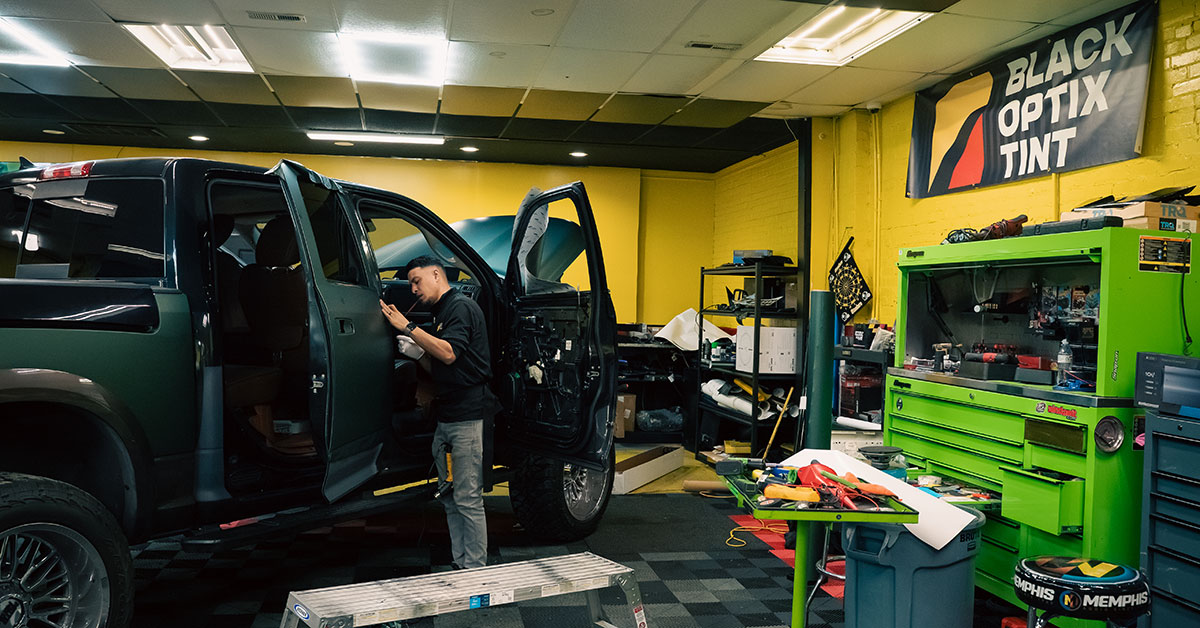
Then there’s the PPF installer’s expertise. A skilled installer working in a clean, climate-controlled environment with proper lighting and tools will charge more than someone working out of a garage. And that difference matters.
Car paint protection film installation is extremely labor-intensive. The installer has to precisely cut, position, squeegee, and heat-form the film around curves and body lines without bubbles, wrinkles, or lifted edges. Poor installation can look worse than no film at all.
The best way to get an accurate sense of cost is to request a quote from a professional PPF installer who can assess your specific vehicle and discuss coverage options. At Black Optix Tint, every location offers free consultations, so you can walk through the options without any pressure.
This is one of the most common questions car owners ask. The short answer: PPF and ceramic coating solve different problems.
PPF is a physical barrier. It sits on top of your paint and absorbs impact. It stops rock chips. It prevents minor scratches. It takes the hit so your paint doesn’t.
Ceramic coating is a liquid polymer that chemically bonds to your paint’s clear coat. It creates an extremely slick, hydrophobic surface that repels water, dirt, and contaminants. Ceramic coating makes your car easier to clean, adds depth and gloss to the finish, and provides UV and chemical resistance. But it’s only a few microns thick. It won’t stop a rock chip.
These aren’t competing products. They complement each other. The strongest setup is PPF on the high-impact areas (or the entire car) with ceramic coating applied over the film and on any remaining unprotected panels. PPF handles physical protection. Ceramic coating adds hydrophobic properties, makes the film easier to maintain, and gives the whole car a uniform look and feel.
Black Optix Tint offers both PPF and ceramic coating services. The technicians at every location can walk you through the best combination for your vehicle and budget.
The film only accounts for part of the result. Installation quality determines whether your PPF looks invisible and lasts for years, or develops bubbles, peeling edges, and visible seams within months. Here’s what separates a great PPF installer from an average one.
Start with the film quality. Not all PPF performs the same, and the difference between entry-level film and professional-grade film shows up fast. Ask about self-healing capability, UV resistance, warranty length, and how the film holds up against yellowing over time.
A good shop can explain what makes their film perform and why they stand behind it. Black Optix Tint locations use professional-grade PPF specifically selected for clarity, durability, and long-term performance.
Next, look at the installation environment. A PPF installer should apply film in a clean, enclosed, well-lit space with controlled temperature. Dust particles trapped under the film during installation become permanent flaws. A shop that installs film outdoors or in a dusty bay is a red flag.
Ask about the warranty, and read the details. Some warranties cover yellowing and cracking but not lifting or peeling. Some require you to maintain the film a certain way. Know what you’re getting before you commit.
And look at their work. Before-and-after photos, customer reviews, and the ability to see a completed vehicle in person will tell you more than any sales pitch. Experienced installers are proud of their work and happy to show it off.
Most premium protective films last between five and ten years, depending on the product, the climate, and how well you maintain them. Some high-end films carry warranties of up to ten years against yellowing, cracking, peeling, and staining.
Climate matters. Cars in sunny, hot regions get more UV damage, which can shorten the life of lower-quality films. But premium films with strong UV inhibitors hold up well even in intense sun.
Road conditions factor in too. Vehicles driven frequently on gravel roads or through construction zones will see more wear on the film’s surface than a car that mostly sees clean highway miles.
Maintenance is simple. Wash your car regularly with a gentle automotive soap and a soft wash mitt. Avoid abrasive compounds or polishes that contain grit. Don’t aim a pressure washer directly at the film’s edges, since high-pressure water can work underneath the film and cause lifting. Skip any waxes or sealants that contain dyes or abrasive particles.
If you’ve got ceramic coating over your PPF, maintenance gets even easier. The hydrophobic surface sheds dirt and water, so the car stays cleaner longer and washes take less effort.
When your PPF does reach the end of its life, a professional can safely remove it using heat without damaging the factory paint underneath. Then you can apply fresh film and start the cycle over.
If you’re considering paint protection film for your vehicle, your local Black Optix Tint can help you figure out the right coverage, the right film, and the right budget. Every consultation is free, and the team can show you exactly what the finished product looks like before you commit. Find your nearest location and get started.
Yes. When a professional installs and removes PPF, it comes off cleanly without harming the factory paint. The adhesive bonds firmly but releases without leaving residue. Your original finish stays protected and preserved underneath the film for the entire life of the installation.
Older and lower-quality films were prone to yellowing, especially in sunny climates. Modern premium films use advanced UV inhibitors and non-yellowing adhesives that maintain clarity for years. This is one reason film quality matters when choosing a PPF installer. Ask specifically about yellowing resistance and check the warranty terms for coverage against color change.
PPF doesn’t repair paint damage. It locks in whatever’s underneath it. If your car has scratches, swirl marks, or chips, you should address those with paint correction or touch-up before having the film installed. Otherwise, you’ll see those flaws through the clear film, and they’ll be sealed in place.
For most car owners, yes. The cost of PPF is almost always less than the total cost of repairing rock chips, repainting panels, and dealing with lower resale value from paint damage. Drivers who log highway miles, live in areas with rough roads or construction, or own vehicles they plan to keep for several years tend to see the most return on the investment.